1. Abandoned Cart Email Sequences
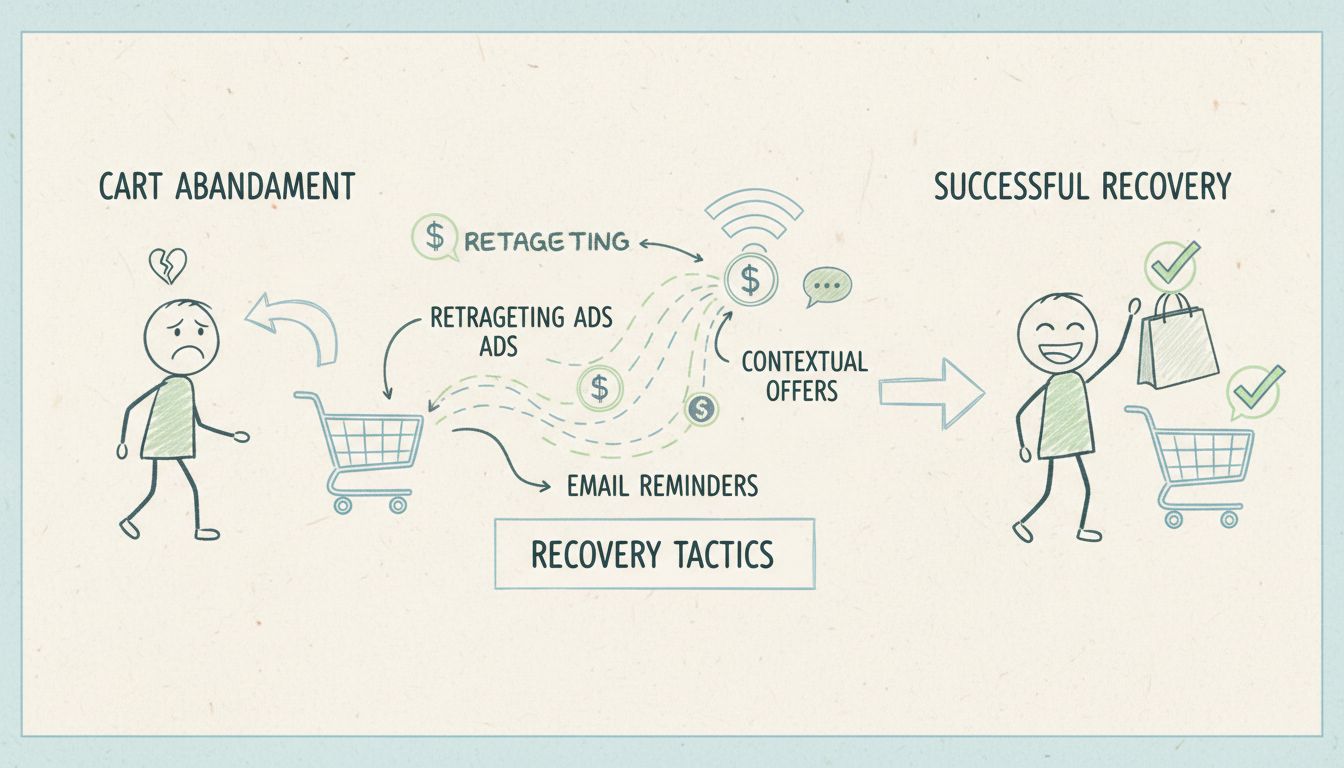
Automated email sequences are the most cost-effective recovery method. First email (1-2 hours after abandonment): simple reminder with cart contents, 30-40% open rate, 8-12% recovery. Second email (24 hours): add urgency (low stock, popular item, expiring cart), 20-30% open rate, 5-8% recovery. Third email (3 days): final reminder, potentially with incentive for high-value carts, 15-20% open rate, 3-5% recovery. Include product images, one-click checkout link, and clear value proposition.
Detect when customers attempt to leave checkout and present targeted offers or assistance. Effective popup strategies: offer help (live chat connection), address common objections (display shipping, security badges), provide small incentive (free shipping threshold), collect email to enable cart recovery if they leave anyway. Exit-intent popups can reduce abandonment by 10-15% when implemented strategically. Avoid aggressive popups that create negative experience.
3. Shipping Cost Optimization
Unexpected shipping costs cause nearly half of all abandonments. Strategies: free shipping above threshold (drives higher order values), flat-rate shipping (predictability), show shipping costs early (shopping cart page), competitive shipping (subsidize if necessary), regional shipping tiers, or build shipping into product prices. Many stores find offering free shipping on orders over 1.5X average order value increases conversion enough to offset shipping subsidy.
4. Guest Checkout Implementation
Account creation requirements cause 25% of abandonments. Implement guest checkout as default option with optional account creation after purchase. This reduces friction while still capturing customer data. Post-purchase account creation converts 30-40% of guest checkouts into accounts when presented with benefits (order tracking, saved addresses, faster future checkout, exclusive offers). Never force account creation before allowing purchase.
5. Payment Method Variety
Limited payment options cause 8-12% of abandonments. Offer diverse payment methods: all major credit cards, digital wallets (PayPal, Apple Pay, Google Pay, Shop Pay), buy now pay later (Affirm, Klarna, Afterpay), and region-specific methods. Digital wallets reduce mobile checkout time by 60-70%, significantly reducing mobile abandonment. More payment options increase conversion even if many customers don’t use them - availability builds confidence.
6. Trust Signal Reinforcement
Security concerns cause 15-20% of abandonments. Display trust signals throughout checkout: SSL badges (secure connection), payment security logos (PCI compliance), money-back guarantee, free/easy returns policy, customer reviews, contact information prominently, business verification badges. Position trust elements near payment entry where security concerns peak. Trust signals increase conversion 5-10% despite seeming like minor details.
7. Progress Indicators
Multi-step checkout without progress indication increases abandonment. Clear progress indicators (Step 2 of 3, visual progress bar) reduce abandonment by setting completion expectations. Customers are more likely to complete when they know how many steps remain. Ideal checkout: 2-3 steps maximum, with clear progression, ability to edit previous steps, and mobile-optimized navigation. Minimize required fields - every additional field increases abandonment 5-10%.
8. Live Chat and Support
Offering real-time help during checkout reduces abandonment 10-15%. Implement: proactive chat invitations when customers pause, checkout-specific help (answer payment/shipping questions quickly), visible phone number for immediate assistance, and FAQ links for common questions. Even if few customers use support, its availability builds confidence. Train support staff specifically on checkout assistance rather than general customer service.
9. Cart Saving and Reminders
Allow customers to save carts and receive reminders. Implement: persistent carts (carts save automatically across sessions), email cart reminders (ask for email early, send reminder if abandoned), mobile app push notifications, and SMS reminders for high-value carts. Make saved carts accessible across devices. Some customers genuinely intend to return but forget - simple reminders recover 5-10% without any incentives or pressure.
10. Remarketing and Retargeting
Use paid advertising to bring back abandoners. Facebook/Instagram dynamic product ads showing abandoned cart items, Google Display remarketing, platform-specific retargeting, and sequential messaging (escalating urgency). Remarketing converts 2-5% of abandoners at cost-per-acquisition often 50-70% lower than cold traffic. Exclude customers who completed purchase to avoid annoying them. Set frequency caps to prevent ad fatigue.