


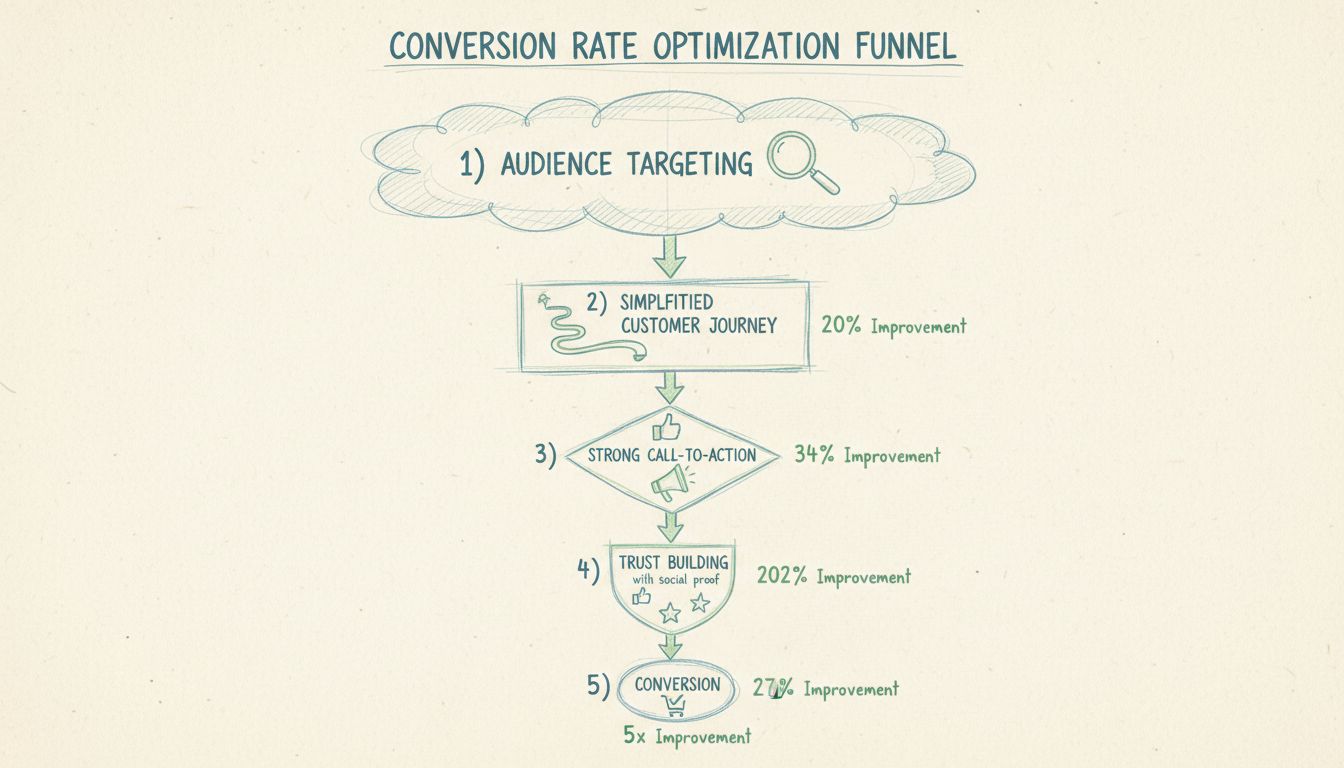
How to Calculate Conversion Rate: Complete Formula & Guide
Learn how to calculate conversion rate with our comprehensive guide. Discover the formula, calculation methods, industry benchmarks, and optimization strategies...
8 min read

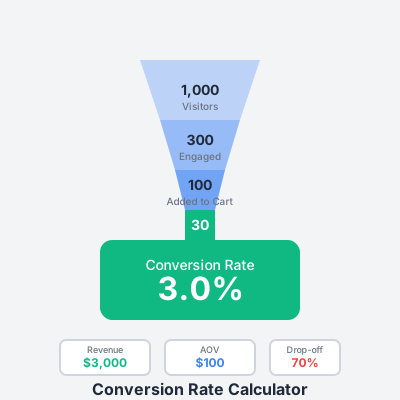
Calculate conversion rates, analyze multi-stage funnels, and compare A/B test results. Identify bottlenecks, measure optimization impact, and make data-driven decisions to improve marketing performance.
Conversion rate is the single most important metric for measuring marketing and website effectiveness. While traffic and impressions show reach, conversion rate reveals actual business impact. A 1% improvement in conversion rate with 10,000 monthly visitors adds 100 customers - potentially tens of thousands in revenue depending on your average order value.
Track conversion rates at multiple levels: overall site conversion, landing page conversion, checkout conversion, campaign conversion, and channel conversion. Segment by traffic source, device type, geographic location, and new vs. returning visitors. These segments often reveal dramatically different conversion rates requiring targeted optimization strategies.
Multi-stage funnel analysis identifies exactly where potential customers drop off, directing optimization efforts to highest-impact areas. If your funnel shows 10,000 visitors, 4,000 product views, 1,000 add-to-cart, 600 checkout initiations, and 300 purchases, calculate stage-by-stage rates: 40% view products, 25% add to cart, 60% proceed to checkout, and 50% complete purchase.
This analysis reveals checkout has the worst conversion rate (50%) and the highest drop-off count (300 lost sales). Improving checkout from 50% to 60% adds 60 sales (20% revenue increase) - far more impactful than improving product views from 40% to 45%, which only adds 8 sales after funnel attrition.
A/B testing compares two variations to determine which performs better with statistical confidence. Test one element at a time: headlines, images, call-to-action buttons, page layouts, pricing displays, or form fields. Run tests simultaneously to eliminate time-based variables affecting results.
Calculate required sample size before testing. For 95% confidence detecting a 20% relative improvement (2% baseline to 2.4%), you need approximately 3,850 visitors per variant. Smaller improvements require larger samples. Running tests without adequate sample size wastes time and produces unreliable results.
Every second of load time decreases conversions by 7%. Pages loading in 1 second convert 3x better than those loading in 5 seconds. Optimize by: compressing images, minifying code, enabling browser caching, using Content Delivery Networks (CDNs), and lazy loading below-fold content. Test load speed with Google PageSpeed Insights and aim for sub-2-second loads.
Mobile load speed matters even more - 53% of mobile visitors abandon sites taking over 3 seconds to load. Optimize mobile separately with responsive images, reduced JavaScript, and accelerated mobile pages (AMP). Even 0.1-second improvements compound to meaningful conversion gains at scale.
Each form field reduces conversion rates by 10-20%. A 10-field form might convert at 5%, while a 3-field form converts at 15%+ for the same audience. Request only essential information initially, then progressively profile customers post-conversion. Use smart defaults, autocomplete, and address lookup to reduce typing.
For signup forms, email-only converts 30-50% higher than email + password. Implement passwordless authentication or social login to eliminate friction. For checkout, enable guest checkout - forcing account creation decreases conversion by 25-40%. Capture account creation post-purchase when commitment is lower.
Specific, action-oriented CTAs convert 2-3x better than generic ones. “Get My Free Trial” outperforms “Submit” by 40-90%. Use first-person language: “Start My Free Trial” beats “Start Your Free Trial” by 20-30%. Create urgency without false scarcity: “Join 10,000+ Marketers” leverages social proof better than “Sign Up Now.”
Button design matters: contrasting colors increase clicks by 20-40%, larger buttons convert better (minimum 44×44 pixels for mobile), and placement above the fold doubles conversion rates. A/B test CTA text, color, size, and position systematically - small changes often yield 20-50% improvements.
Display reviews, testimonials, trust badges, customer count, and media mentions to build credibility. Pages with reviews convert 270% better than those without. Specific testimonials outperform generic praise - “This saved me 10 hours per week” beats “Great product!” Include photo, name, and company for authenticity.
Trust badges (SSL certificates, payment processor logos, satisfaction guarantees) near checkout increase conversions by 15-45%. Real-time social proof (“127 people viewed this today”) creates urgency. User-generated content (customer photos, video testimonials) converts 5x better than brand-created content due to authenticity.
Mobile commerce accounts for 70%+ of traffic but only 40% of conversions - a massive optimization opportunity. Mobile-specific issues: buttons too small for fingers (minimum 44×44 pixels), forms requiring excessive typing (use autofill and dropdowns), and multi-step processes without progress indicators.
Implement thumb-friendly navigation with bottom placement, one-column layouts eliminating horizontal scrolling, and click-to-call buttons for phone numbers. Test exclusively on mobile devices - desktop previews miss touch interaction issues. Mobile conversion rate typically runs 30-50% of desktop; close this gap through dedicated mobile optimization.
Cart abandonment averages 70% - mostly due to checkout friction. Top abandonment causes: unexpected costs (shipping, taxes), forced account creation, complicated forms, security concerns, and limited payment options. Show total costs upfront, offer guest checkout, minimize form fields, display trust badges, and provide multiple payment methods (credit cards, PayPal, Apple Pay, Google Pay).
Implement progress indicators showing checkout steps, enable address autocomplete, save cart data if users leave, and send abandoned cart emails with easy return links. Express checkout options (Amazon Pay, Shop Pay) convert 30-50% higher than standard checkout by eliminating form entry entirely.
Higher-intent traffic converts better than broad audiences. A 1% conversion rate from cold Facebook traffic might improve to 10% from Google search traffic with buyer-intent keywords. Focus acquisition on channels delivering highest-conversion visitors rather than lowest-cost traffic. Sometimes 3x higher cost-per-click yields 10x better conversion rates, dramatically improving unit economics.
Negative keywords and audience exclusions prevent wasted spend on low-intent visitors. If mobile traffic converts 50% of desktop rates, allocate budget accordingly or optimize mobile experience before scaling mobile acquisition. Segment conversion rates by traffic source and double down on best performers.
Companies running continuous A/B testing achieve 3-5x higher conversion improvement rates than those optimizing sporadically. Develop testing roadmap: test high-traffic pages first (maximum impact), focus on elements affecting micro-conversions (form fields, CTA buttons), and run tests for statistical significance (typically 1-4 weeks depending on traffic).
Prioritize tests by potential impact × ease of implementation. Changing headline text (easy, medium impact) often ranks higher than redesigning entire pages (difficult, high impact but risky). Document all tests - winning and losing variations - to build optimization knowledge base. Losing tests provide valuable insights about what doesn’t work for your audience.
Manage multiple affiliate programs and improve your affiliate partner performance with Post Affiliate Pro.
Learn how to calculate conversion rate with our comprehensive guide. Discover the formula, calculation methods, industry benchmarks, and optimization strategies...
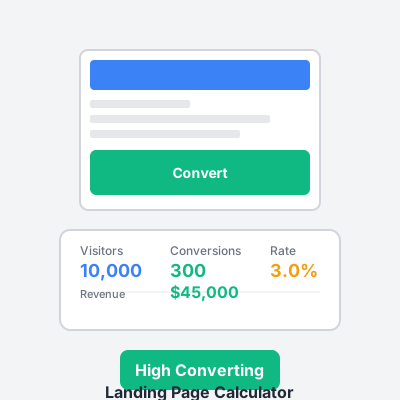
Free landing page calculator to analyze conversion rates, calculate revenue per visitor, and optimize landing page performance. Measure traffic, conversions, an...
Learn what conversion rate means in affiliate marketing, why it matters, how to calculate it, and the best strategies to optimize your campaigns for higher conv...
Join our community of happy clients and provide excellent customer support with Post Affiliate Pro.




Cookie Consent
We use cookies to enhance your browsing experience and analyze our traffic. See our privacy policy.