


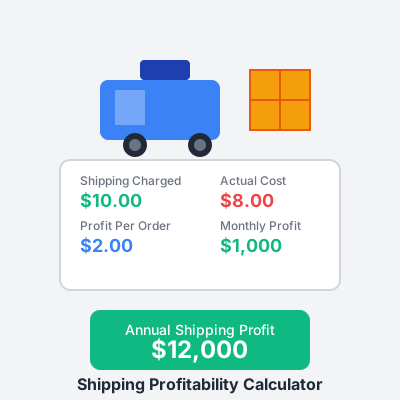
Shipping Profitability Calculator - Optimize Shipping Costs & Strategy
Free shipping profitability calculator to analyze shipping costs, evaluate free shipping offers, and optimize delivery strategies. Calculate true shipping ROI a...
7 min read

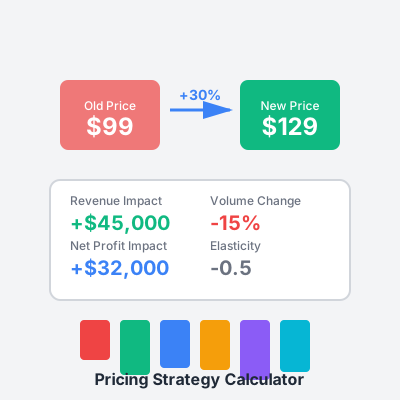
Compare multiple pricing strategies to find your optimal price point. Calculate costs, margins, and profits across cost-plus, value-based, and competitive pricing models to make data-driven pricing decisions that maximize profitability.
Cost-Plus Pricing is the most straightforward approach - calculate your total costs and add a markup percentage to determine your selling price. This ensures profitability and is easy to implement, making it popular for manufacturing, wholesale, and retail businesses. However, it ignores customer value perception and competitive positioning. Use cost-plus pricing for standardized products, when entering new markets with unclear value perception, or when costs are the primary competitive differentiator.
Value-Based Pricing sets prices based on perceived customer value rather than your costs. This strategy requires deep understanding of what customers are willing to pay for the outcomes your product delivers. Value-based pricing typically generates the highest margins because it captures customer surplus. It works best for differentiated products, innovative solutions, and when you can clearly communicate and demonstrate value. The challenge is accurately measuring customer value perception and justifying premium prices.
Competitive Pricing analyzes competitor prices to position your product strategically in the market. You might price at parity (same as competitors), at a discount (penetration strategy), or at a premium (differentiation strategy). This approach acknowledges market realities and customer price expectations. However, blindly following competitor prices can lead to a race to the bottom or leave money on the table if your value exceeds competitors. Use competitive analysis as one input in pricing decisions, not the sole determinant.
Profit Margins vs. Volume - Higher prices generate better margins but may reduce sales volume. Lower prices increase volume but compress margins. The optimal price maximizes total profit (margin x volume), not just margin or volume alone. Use this calculator to model different scenarios and find the sweet spot where profit is maximized. Consider your capacity constraints - high-volume, low-margin strategies require ability to scale efficiently.
Customer Segmentation - Different customer segments often have different willingness to pay. B2B customers typically accept higher prices than B2C for the same product. Enterprise customers pay premiums for support and reliability. Budget-conscious segments require aggressive pricing. Consider implementing tiered pricing with different feature sets and price points to capture value across segments without leaving money on the table.
Price Positioning - Your price communicates your market position. Premium prices signal quality, luxury, and exclusivity but require delivering commensurate value. Mid-market prices suggest balance between value and affordability. Budget prices signal basic functionality and cost leadership. Ensure your price matches your brand positioning, product quality, and customer expectations. Misalignment causes confusion and lost sales.
Testing and Validation - Never roll out major price changes without testing. Use A/B testing to compare price points on small customer segments. Monitor conversion rates, revenue per customer, and total profit. Test during different seasons and market conditions. Survey lost prospects to understand price objections. Analyze customer lifetime value at different price points. Iterative testing reveals your optimal price and reduces risk of major mispricing.
Communicating Value - Premium prices require effective value communication. Clearly articulate benefits, outcomes, and differentiation. Use social proof (testimonials, case studies, user counts) to validate value. Offer guarantees to reduce purchase risk. Compare to alternatives (including doing nothing) to demonstrate ROI. Break down total cost to show per-day or per-use cost. Frame price in context of value delivered, not just the number itself.
Enter markets with below-market prices to rapidly gain share, then gradually increase prices as you establish brand presence and customer loyalty. This strategy works when: customers are price-sensitive, you have significant scale economies, you can sustain initial low margins, and switching costs make customers sticky. Examples: streaming services, SaaS tools, and marketplace platforms. Risk: training customers to expect low prices makes later increases difficult.
Launch with high prices to capture early adopters willing to pay premium for innovation, then lower prices over time to reach broader markets. Effective for: technology products, innovative solutions, and products with high development costs. Benefits: maximize early revenue, segment markets by price sensitivity, and recover development costs quickly. Risk: high prices may attract competitors faster and limit initial market penetration.
Offer multiple products together at a price lower than buying individually. Bundles increase average order value, move slow-selling inventory, and create perception of value. Effective bundling: pair high-margin with low-margin products, combine core product with complementary accessories, and create good-better-best bundles. Ensure bundle price still maintains healthy margins while providing genuine savings versus individual purchase.
Offer basic features free to attract users, then charge for premium features, capacity, or support. This strategy builds large user bases, generates word-of-mouth growth, and allows customers to experience value before paying. Keys to success: free tier must deliver real value (not just trial), paid tiers must offer compelling upgrades, conversion rate from free to paid needs to be 2-5% minimum, and infrastructure costs for free users must be sustainable.
Adjust prices in real-time based on demand, inventory, competition, customer segment, or other factors. Common in: airlines, hotels, ride-sharing, and e-commerce. Benefits: maximize revenue across demand curves, clear excess inventory, and capture consumer surplus. Requirements: sophisticated pricing algorithms, real-time data, and acceptance by target market. Risks: customer backlash if perceived as unfair, and complexity in implementation.
Charge different prices in different markets based on local economics, competition, regulations, and customer purchasing power. International businesses commonly use purchasing power parity to adjust prices. Ensure geographic pricing accounts for: currency fluctuations, local tax and regulatory requirements, competitive landscape differences, shipping and distribution costs, and market maturity. Prevent arbitrage by restricting cross-geography sales or using region locks.
Create multiple pricing levels with different feature sets, capacity limits, or service levels. Good-better-best tiers let customers self-select based on needs and budget. Effective tier design: meaningful differentiation between tiers, clear upgrade path, anchor with highest tier (makes middle tier seem reasonable), price gaps that reflect value gaps, and limit tiers to 3-4 options to avoid decision paralysis.
Temporary price reductions to drive sales, clear inventory, attract new customers, or respond to competition. Effective promotions: time-limited to create urgency, targeted to specific segments or products, maintain profitability even at discount (avoid selling at loss), and have clear goals and success metrics. Risks: training customers to wait for promotions, devaluing brand, attracting only price-sensitive customers who churn after promotion ends.
Price select products below cost to attract customers who will purchase other profitable items. Common in: retail (milk, eggs), streaming (device subsidies), and gaming (console subsidies). This works when: you have high-margin companion products, customers rarely buy only loss leaders, and customer lifetime value exceeds acquisition cost including subsidy. Calculate total basket profitability, not just individual product margins.
Affiliate-friendly pricing strategies: attractive base prices drive conversion (improving affiliate earnings), clear tier differentiation helps affiliates segment promotions, special promo codes for affiliates track attribution and provide exclusive discounts, recurring revenue products offer ongoing affiliate commissions, and healthy margins ensure sustainable commission rates. Partner with affiliates on pricing strategy - they understand customer objections and competitive positioning from front-line promotion experience.
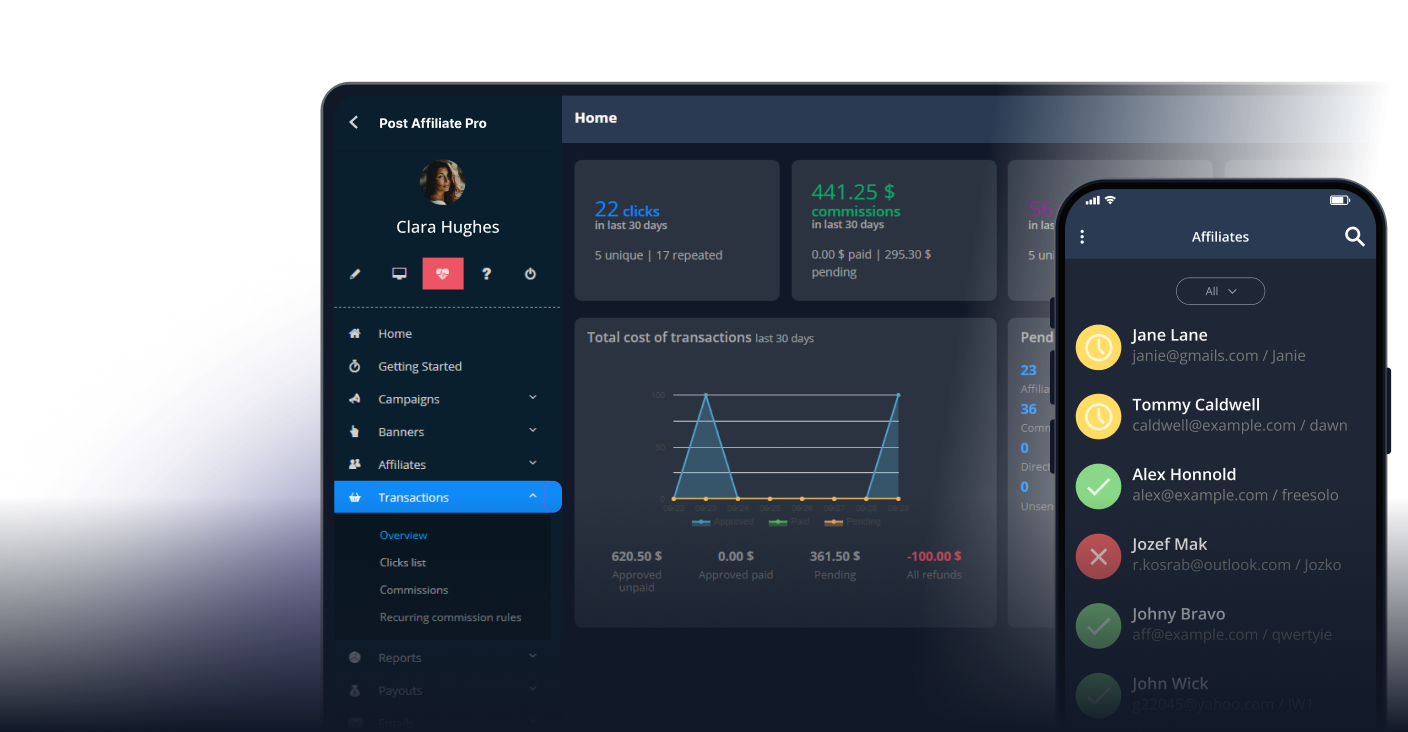
Manage multiple affiliate programs and improve your affiliate partner performance with Post Affiliate Pro.
Free shipping profitability calculator to analyze shipping costs, evaluate free shipping offers, and optimize delivery strategies. Calculate true shipping ROI a...
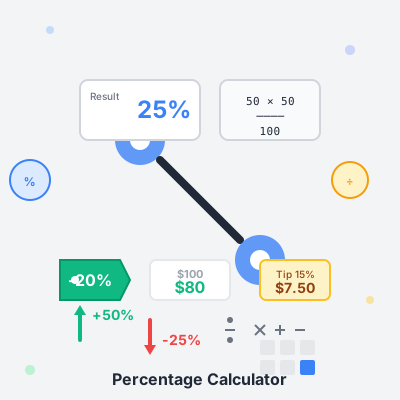
Free online percentage calculator with 12+ calculation modes. Calculate percentages, discounts, tips, margins, VAT, commissions, and more. Instant results with ...
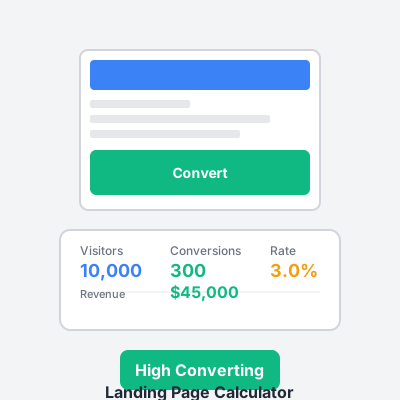
Free landing page calculator to analyze conversion rates, calculate revenue per visitor, and optimize landing page performance. Measure traffic, conversions, an...
Join our community of happy clients and provide excellent customer support with Post Affiliate Pro.



Cookie Consent
We use cookies to enhance your browsing experience and analyze our traffic. See our privacy policy.