Demystifying Affiliate Marketing: The Three Categories for Success
Affiliate marketing
is a dynamic field with varied strategies and methodologies. Understanding the nuances of different types of affiliate marketing
can help you choose the right approach to maximize your success. In 2009, renowned affiliate marketer
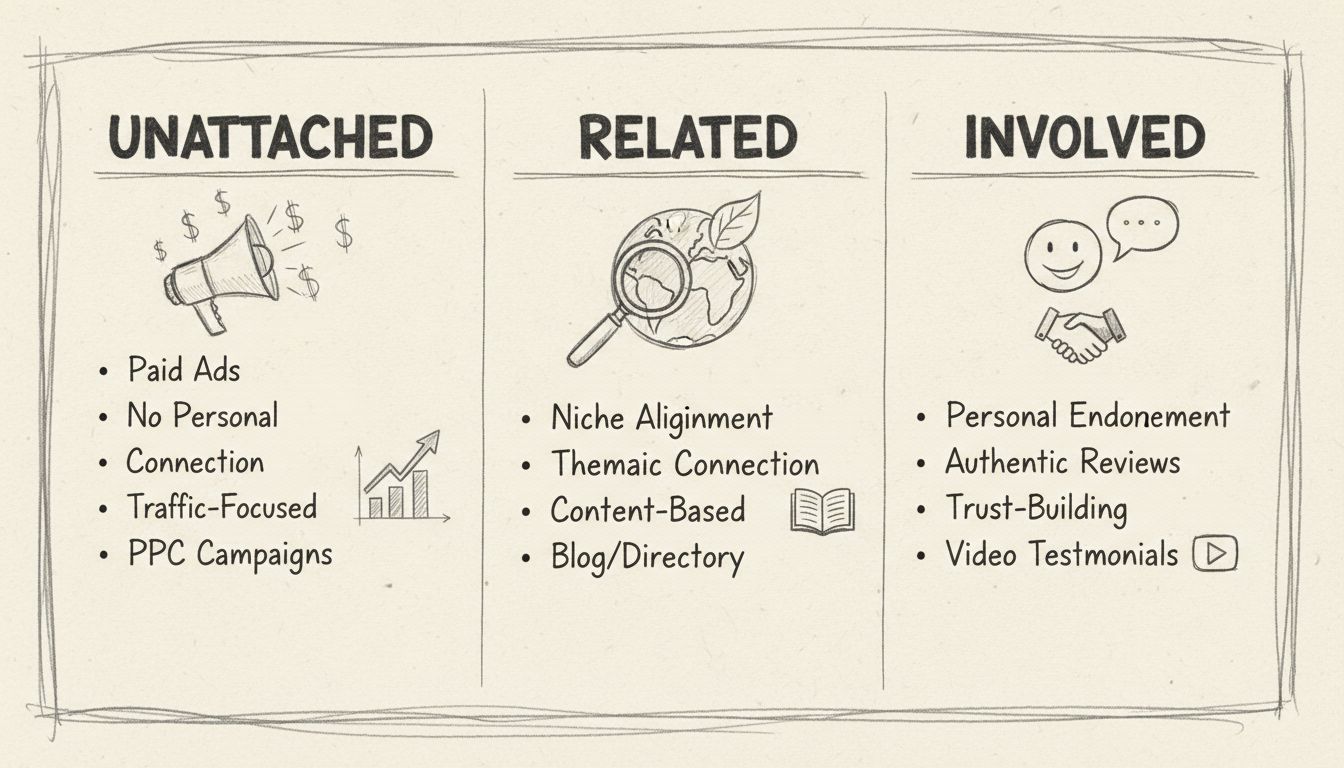
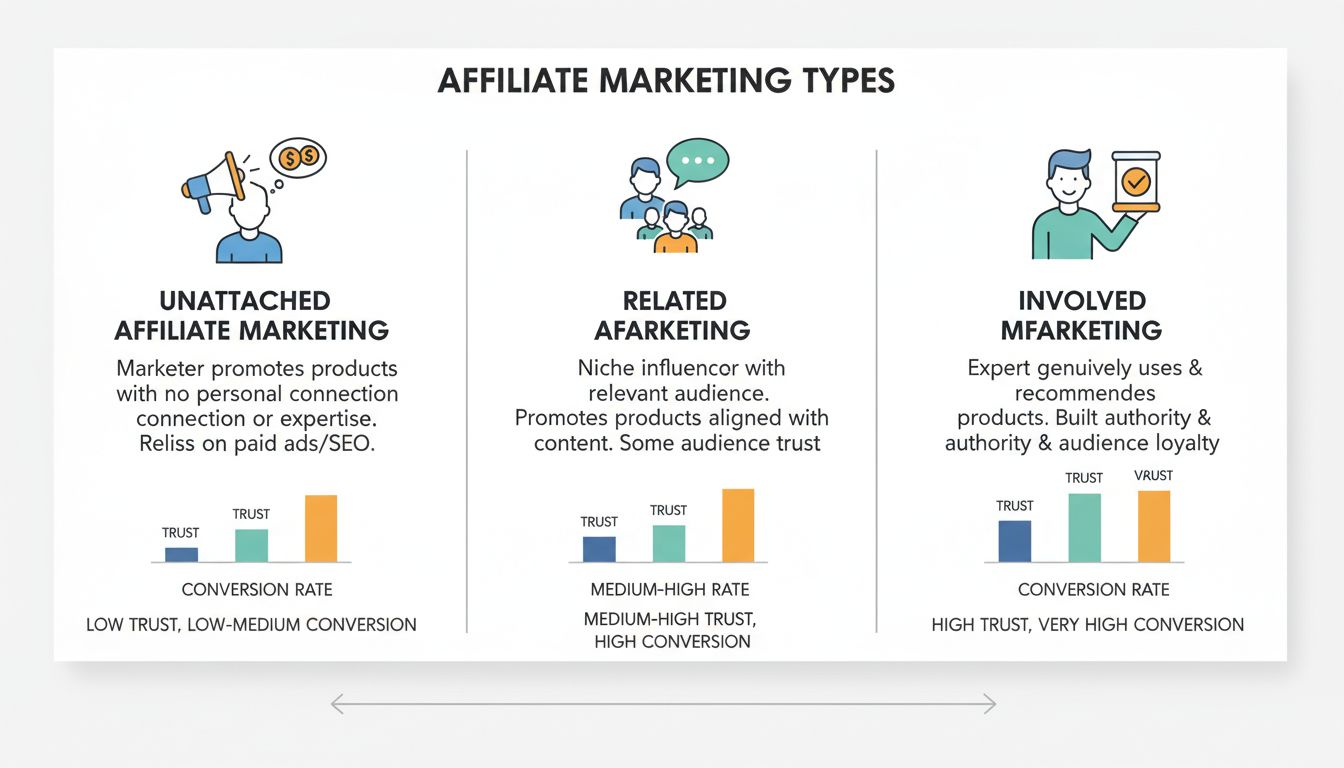
Pat Flynn categorized affiliate marketing into three distinct types: unattached, related, and involved. Each category offers unique advantages and challenges depending on your goals and resources.
Unattached Affiliate Marketing
Unattached affiliate marketing
is characterized by the marketer having no direct connection to the product or service they promote. This business model appeals primarily to those looking to generate income without a deep investment in the business or customer relationships. Typically, unaffiliated affiliates
engage in pay-per-click (PPC) campaigns, embedding affiliate links
in the hopes of generating sales without making personal endorsements.
While this approach offers minimal responsibility and can be attractive for its simplicity, it lacks authority and personal touch. Affiliates under this model cannot make claims about the product’s effectiveness, as they lack firsthand experience or expertise. As such, it often attracts individuals interested in quick earnings rather than building a dedicated customer base.
Related affiliate marketing
strikes a balance between the unattached and involved models. Here, marketers maintain some level of authority and influence within a niche but are not necessarily dependent on the product or service. This strategy is ideal for individuals who already possess a following, such as fashion bloggers or YouTube influencers
.
By leveraging their established audience, related affiliates can effectively drive traffic to brands they may not have personally used. However, this approach carries the risk of damaging audience trust if the promoted products do not meet expectations. Careful consideration and disclosure are crucial to maintaining credibility and long-term success.
Involved Affiliate Marketing
Involved affiliate marketing
demands a deeper connection and commitment to the product or service. Affiliates in this category have personally used and vetted the product, empowering them to make genuine claims about its benefits and performance. This approach builds trust with consumers, who view involved affiliates
as reliable sources of information.
Though this model requires more effort and time to establish credibility, it often yields greater rewards. Customers appreciate the authenticity and are more likely to purchase based on the affiliate’s personal endorsement. Involved affiliate marketing is ideal for those willing to invest in building lasting relationships with their audience.